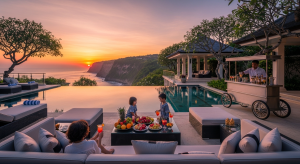
The Definitive Bali Private Resort Guide
The Indian Ocean breeze carries the scent of frangipani and sea salt across an expansive estate, where emerald rice paddies meet the azure horizon. Here, discretion defines every interaction, and personal sanctuary becomes the ultimate luxury.
Defining the Bali Private Resort Experience
A Bali private resort redefines luxury accommodation, moving beyond the traditional hotel model to offer an entire estate dedicated to a single party. This distinction is crucial for UHNW families, celebrities, and royalty seeking absolute privacy and an uncompromised environment. Unlike a typical villa rental, a private resort operates with the infrastructure and service levels of a five-star hotel, yet exclusively for your group. Guests gain full command over multiple villas, expansive grounds, and often private beach access or secluded clifftop vantage points. The average private resort estate spans several hectares, ensuring generous space and complete separation from the outside world. This exclusive buyout model guarantees that every facility, from infinity pools to private spas, remains solely for your use, mitigating any concerns regarding public interaction or shared spaces. Dedicated staff, often numbering 10-20 individuals for a single group, anticipate every need, from bespoke culinary requests to arranging discreet excursions. This level of service ensures a seamless stay, where personal preferences dictate the operational rhythm of the estate. The commitment to exclusivity extends to security protocols, with trained personnel providing 24/7 protection, often integrated with advanced surveillance systems. For instance, many estates on the Bukit Peninsula, like those overlooking Nyang Nyang Beach, maintain perimeter security teams and controlled access points. This comprehensive approach to privacy and service elevates the Bali private resort from mere accommodation to a truly bespoke private sanctuary.
Strategic Sanctuary: Choosing Your Bali Private Resort Locale
Selecting the ideal locale for a Bali private resort is paramount, as each region offers a distinct character and set of experiences. The island’s diverse geography presents options ranging from dramatic clifftops to serene rice fields, each catering to specific desires for privacy and engagement.
**Uluwatu**, on the southern tip of the Bukit Peninsula, provides dramatic oceanfront estates perched atop limestone cliffs. Properties here command sweeping views of the Indian Ocean, offering sunsets and direct access to world-class surfing breaks like Padang Padang. The area maintains a tranquil, exclusive atmosphere, with development carefully managed to preserve natural beauty. Many estates in Uluwatu feature land sizes exceeding 5,000 square meters, providing expansive gardens and multiple pavilions.
**Nusa Dua**, known for its meticulously landscaped beachfront and integrated luxury complexes, offers private resorts within a secure, high-end zone. This area is ideal for families seeking calm waters, pristine beaches, and proximity to championship golf courses like the Bali National Golf Club, established in 1988. Security is a hallmark of Nusa Dua, with regulated access points ensuring a highly controlled environment.
**Ubud**, set amidst central Bali’s verdant rice terraces and spiritual heartland, presents private resorts that blend seamlessly with nature. Here, estates often feature traditional Balinese architecture, open-air living spaces, and views of the Ayung River valley. The focus is on wellness, cultural immersion, and tranquility. A significant number of resorts in Ubud draw inspiration from the Tri Hita Karana philosophy, integrating harmony with nature, humanity, and the divine. For cultural enrichment, the Agung Rai Museum of Art (ARMA) in Ubud, founded in 1996, offers a profound collection of Balinese and Indonesian art.
**Canggu**, once a quiet village, has evolved into a vibrant hub with a bohemian surf culture. Private resorts in Canggu offer a blend of contemporary design and traditional elements, often within walking distance of popular beaches like Echo Beach. This area suits those who appreciate a lively atmosphere combined with the privacy of an exclusive estate, with some properties offering direct beach access.
**Tabanan**, located west of Canggu, remains largely untouched, offering expansive rice paddies and volcanic sand beaches. Private resorts here promise ultimate seclusion, often set on large land parcels measuring over one hectare, providing an authentic Balinese experience away from the busier tourist areas. The iconic Tanah Lot Temple, a UNESCO World Heritage site candidate, is a prominent landmark in the region.
Choosing a Bali private resort means aligning your desire for privacy and luxury with the distinct character of these premier locations. Learn more about Bali’s diverse regions on Wikipedia.
Beyond the Horizon: The Architecture and Design of Bali Private Resorts
The architecture and design of a Bali private resort are integral to its identity, reflecting a sophisticated blend of traditional Balinese aesthetics and contemporary luxury. These estates are not merely buildings; they are meticulously crafted environments designed to harmonize with Bali’s natural beauty and spiritual ethos. Balinese architectural principles, deeply rooted in the Tri Hita Karana philosophy, emphasize balance between humanity, nature, and the divine. This translates into open-plan living spaces that invite the tropical breeze, natural materials like local hardwoods (jati and merbau), volcanic stone (paras), and thatched roofs (alang-alang). The integration of water features, such as koi ponds and infinity pools that seemingly merge with the ocean or rice fields, is a common design element, symbolizing purity and tranquility.
Modern Bali private resorts often incorporate sustainable design practices. This includes rainwater harvesting systems, solar panel integration, and the use of locally sourced, recycled materials. Many properties hold certifications like “Green Globe” or adhere to specific environmental impact assessments. For example, some estates implement advanced waste management systems, reducing their ecological footprint by up to 80%. Interior design often features custom-made furniture by local artisans, intricate wood carvings, and a curated collection of Indonesian art. The spatial arrangement typically includes multiple pavilions connected by shaded walkways, ensuring privacy for individual guests within the larger estate. Master bedrooms often exceed 100 square meters, featuring outdoor showers and private plunge pools. The design prioritizes natural light and ventilation, minimizing the need for artificial cooling and enhancing the connection to the lush tropical surroundings. This thoughtful approach creates a unique sense of place, where every detail contributes to an atmosphere of serene elegance.
The Art of Service: Dedicated Staffing and Bespoke Offerings
The hallmark of a Bali private resort is its dedicated staff, meticulously trained to deliver an level of bespoke service. This service model transcends typical hotel offerings, providing a discreet, anticipatory, and highly personalized experience for UHNW guests. Each private resort operates with a full complement of professionals, typically including a private executive chef, multiple butlers, housekeepers, gardeners, and security personnel. The staff-to-guest ratio can often reach 3:1 or even higher, ensuring immediate attention to every request.
The private chef, often trained in international culinary arts, works directly with guests to craft personalized menus. Whether it’s a multi-course degustation dinner, specific dietary requirements, or a casual poolside BBQ, every meal is prepared to exacting standards using fresh, locally sourced ingredients. Many estates maintain their own organic gardens, providing produce harvested just hours before preparation.
Dedicated butlers act as personal concierges, managing everything from itinerary planning and booking private yacht charters to arranging helicopter transfers from Ngurah Rai International Airport (DPS) to remote helipads on the estate. They handle all logistical details, allowing guests to focus entirely on their retreat. Security is a paramount concern, with trained personnel providing 24/7 surveillance and perimeter control. Many estates employ former military or police officers, ensuring a robust security presence, often complemented by advanced CCTV systems and secure access points. For example, estates in Nusa Dua and Uluwatu often have a three-tiered security system, including perimeter patrols, internal monitoring, and personal detail options.
Beyond the core team, a Bali private resort can arrange a vast range of bespoke services: private yoga instructors, masseuses, personal trainers, nannies, and even cultural advisors for authentic Balinese experiences. Guests can commission private performances of traditional Balinese dance or Gamelan music, or arrange exclusive access to local artisans and spiritual healers. This comprehensive, discreet service model ensures that every aspect of the stay is meticulously managed, providing an environment of ultimate comfort, privacy, and peace of mind. For more insights into Indonesian tourism, visit Indonesia Travel.
Navigating Exclusivity: Regulations, Certifications, and Choosing Wisely
Choosing a Bali private resort involves understanding specific regulations and certifications that ensure both legality and quality. For UHNW individuals, discretion and compliance are as crucial as luxury itself. In Indonesia, private villas and resorts operate under various legal frameworks. Key among these is the Izin Mendirikan Bangunan (IMB), or Building Permit, which confirms the structure’s legality. For commercial operations, a Pondok Wisata license (Tourist Accommodation Permit) or Hotel License is required, depending on the scale and services offered. A reputable Bali private resort will always possess these valid permits, ensuring operational legitimacy and adherence to local zoning laws.
Beyond basic legality, certain certifications speak to quality and safety. The Cleanliness, Health, Safety, and Environmental Sustainability (CHSE) certification, introduced by the Ministry of Tourism and Creative Economy, became particularly relevant post-pandemic. This certification assures guests that the property adheres to stringent health and hygiene protocols. Other relevant certifications might include those related to environmental management (e.g., ISO 14001) or sustainable tourism practices, although these are less common for individual private estates.
When selecting a Bali private resort, due diligence extends to reviewing contractual agreements. Clarity on staff inclusion, service charges, cancellation policies, and liability is essential. Reputable operators will provide transparent terms. It is also wise to inquire about the ownership structure and management company’s track record. Some top-tier private resorts are managed by established international luxury hospitality groups, offering an additional layer of assurance regarding service standards and operational integrity. Furthermore, understanding the local regulations regarding guest registration and data privacy is important, as these vary by region within Bali. Ensuring that your chosen Bali private resort adheres to these standards guarantees not just luxury, but also peace of mind and legal compliance during your stay.
Crafting Your Retreat: A Framework for Selecting the Ideal Bali Private Resort
Selecting the ideal Bali private resort requires a methodical approach, ensuring every detail aligns with your specific desires for luxury, privacy, and experience. Begin by defining your primary objective: is it absolute seclusion for a honeymoon, a secure compound for a family reunion, or a discreet base for high-profile business discussions? This clarity guides subsequent choices.
**Location Analysis:** Revisit the geographical distinctions. For dramatic clifftop vistas and surfing, Uluwatu is unmatched. For cultural immersion and wellness, Ubud remains the spiritual heart. Nusa Dua offers manicured beaches and controlled environments, while Tabanan provides untouched natural beauty. Consider proximity to specific activities or events you plan to attend. For example, a resort near Jimbaran provides access to fresh seafood markets within a 15-minute drive.
**Estate Specifications:** Evaluate the physical attributes of the Bali private resort. How many bedrooms are required? What is the total land size? Does it offer specific amenities like a private cinema, tennis court, or a helipad for direct transfers? For larger groups, ensuring adequate communal spaces and private retreats for individuals is essential. Verify the number of dedicated staff and their specific roles – a 1:1 staff-to-guest ratio is often indicative of superior service.
**Service Customization:** Inquire about the extent of bespoke services. Can the private chef accommodate highly specific dietary needs or procure rare ingredients? Are there options for specialized security details, including close protection officers? What level of concierge service is available for arranging exclusive excursions, such as private yacht trips to Nusa Lembongan or chartered flights to Komodo National Park, a UNESCO World Heritage site?
**Reputation and Vetting:** Research the resort’s management and ownership. Seek testimonials from other UHNW clients, often available through trusted luxury travel advisors. Review their adherence to local regulations and international luxury standards. A thorough vetting process ensures that the Bali private resort not only meets but exceeds your expectations for an exclusive, private, and secure retreat.
Discover the pinnacle of bespoke luxury and privacy. Explore our exclusive collection of Bali private resort estates, each offering a sanctuary tailored to your exact specifications. Begin planning your extraordinary retreat by visiting our homepage or consulting our experts for a personalized consultation. Your ultimate Bali private resort experience awaits.